Thursday, December 15, 2011

Paris insolite


Envie de rencontrer des Parisiens hors du commun ? 
Rendez-vous sur www.brevesdetrottoirs.com 

Réalisé par le journaliste Olivier Lambert et le photographe Thomas Salva, ce travail a été spécialement conçu pour Internet.

Sur le site, vous trouverez un plan de Paris avec des portraits. Cliquez sur l’un deux* pour découvrir un petit film sur un personnage étonnant. Entre Katja, la coiffeuse de 78 ans, Léo le libraire, Caroline, l’exploratrice de saveurs, François le marionnettiste ou bien encore Daniel, conducteur de bus improvisant une visite guidée de Paris pour ses passagers, vous découvrirez la capitale française avec un autre oeil. Poétique et dépaysant !


Bonnes rencontres parisiennes,


* l’un deux = any one of


Wednesday, December 7, 2011

Fête des Lumières


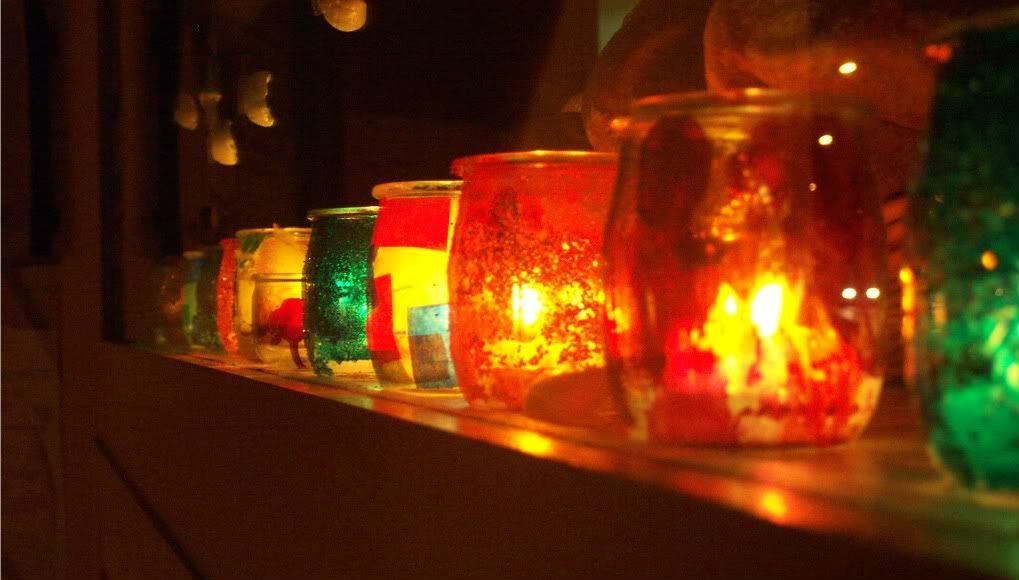
Every year on December 8th, the city of Lyon becomes a sparkling jewel as houses, businesses and apartment buildings are lit by millions of small votive candles on all their windowsills. The Fête des Lumières originated as a celebration of Mary, Jesus's mother. But over time, it has become for many a simple celebration of light and its beauty.

It's a fun way to really get into the Christmas spirit, with lights, candles, hot chestnuts and hot, spiced wine to drink in Lyon as well as in many of the little towns and villages surrounding the city. This year the celebration starts on December 8th and continues through the weekend. 


There is no way to describe in words Lyon's fairy-like quality during the festival, so I wanted to share it with a photo-tour.
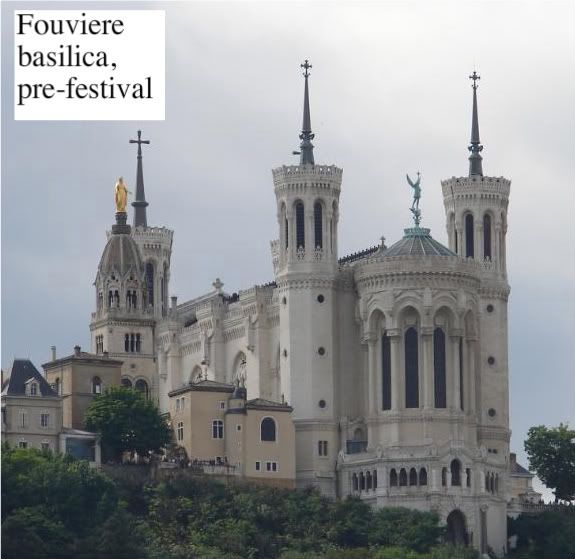
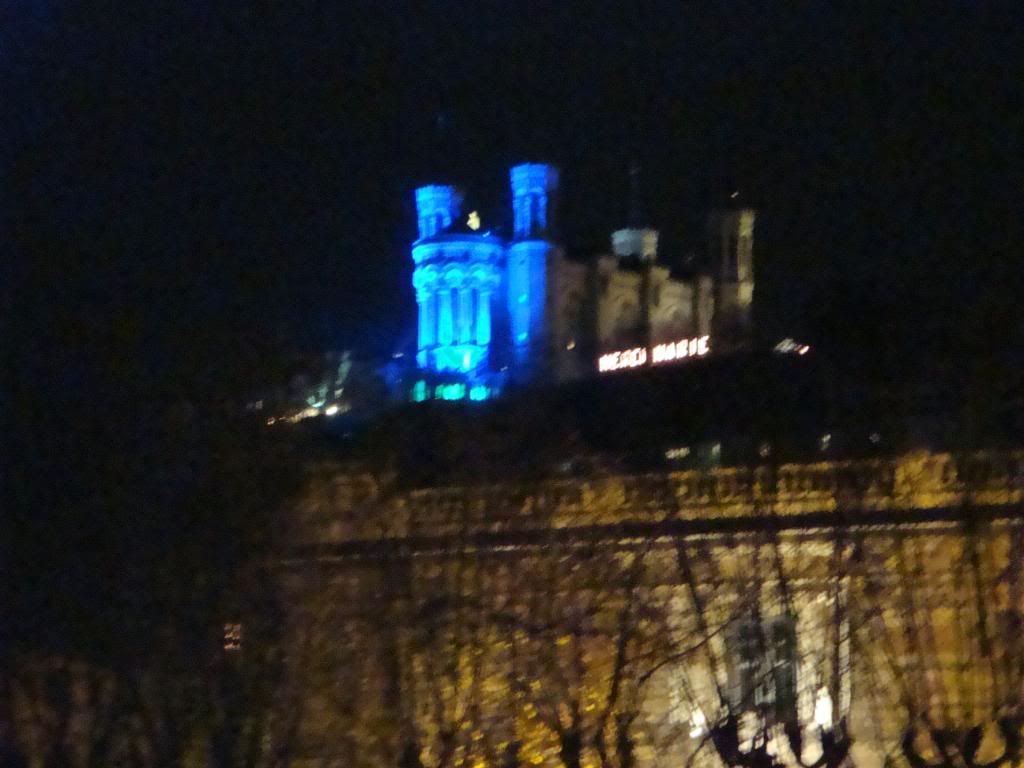
...and Fourviere during the festival


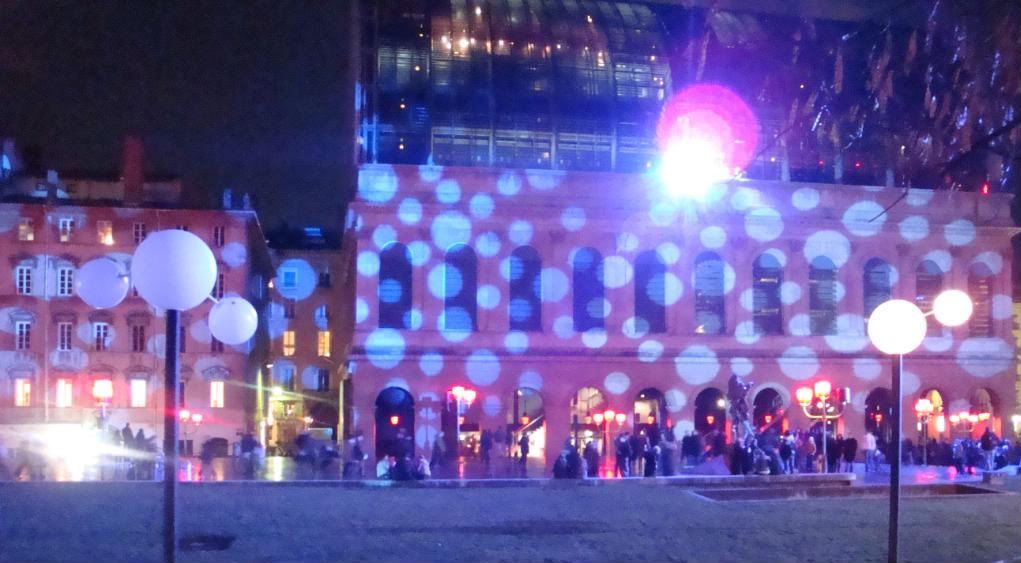
Many of the little squares (les places) and churches become canvases for light displays. Some tell stories and others are more abstract. All the shows run idependently from one another throughout the festival. Each light show runs on a continuous loop, with a soundtrack. Some even include narration. Festival-goers are able to then vote online for the 'Best of Festival' award.


Lyon Opera House, before its show.


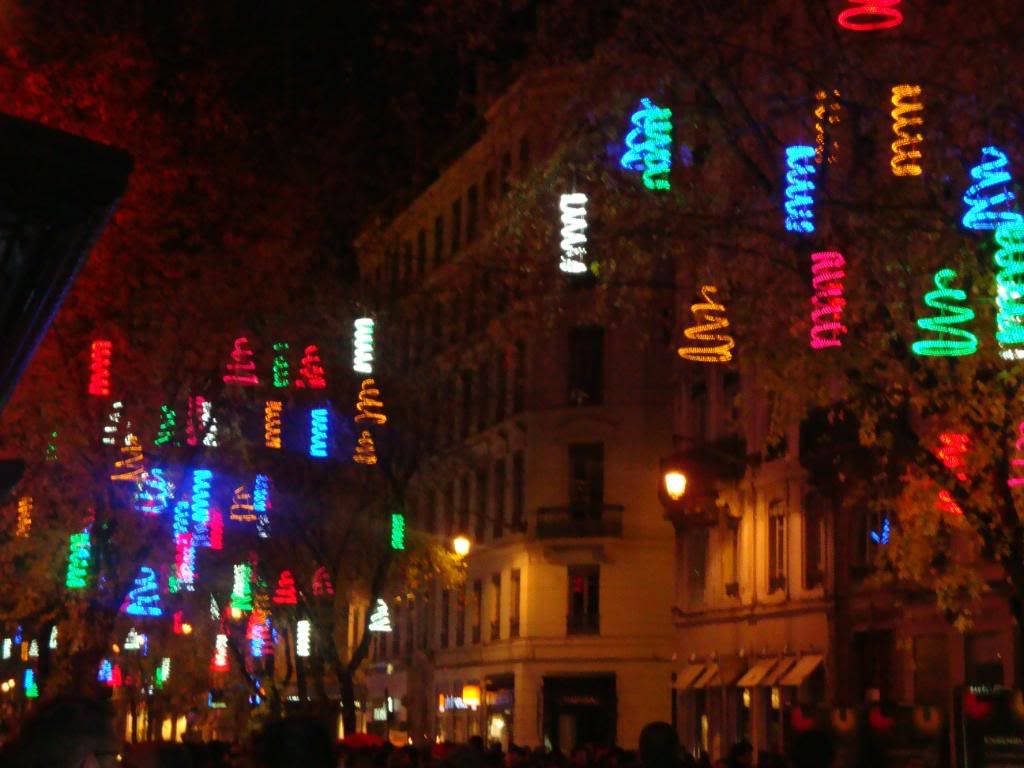
Walking along the streets on la presqu'île (presque= almost, île= island, so presqu'ile means 'almost-island', or, peninsula) there are lights of all kinds hung from almost anything, like this: 
 Have a light-filled holiday season!


Friday, November 4, 2011

Faire le tour du monde - en France !


Savez-vous qu’on peut rester en France et faire le tour du monde ? Voici des noms de villages français qui rappellent d’autres contrées plus lointaines !

- Allemagne-en-Provence, dans les Alpes-de-Haute-Provence
- Argentine, en Savoie
- Barcelonne, dans la Drôme 
- Les Déserts, en Savoie
- Montréal, dans le Gers
- Saint-Affrique, dans l’Aveyron
- Suisse, en Moselle
- Soudan en Loire-Atlantique
- Venise, dans le Doubs
- Vienne, dans l’Isère

Bon voyage !

Tuesday, October 18, 2011

Learn a foreign language!

"What do you call someone who speaks 2 languages? Bi-lingual. What do you call someone who speaks 3 languages? Tri-lingual. What do you call someone who only speaks one language? American."
 
Americans are often criticized by people in other countries because to be honest, we aren't all that great at learning foreign languages. But, to be fair, people usually rank their activities in priority order, giving greater weight to those things we feel we 'need' to do. In general, Americans don't feel a strong need to learn another language. Why?
 
The main reason is due to geography. Canada is mostly English-speaking, and Spanish, remains largely restricted to regions near the Mexican border (which is changing rapidly). The other reason is that English is quickly becoming the global language of science, commerce, and diplomacy (a title that used to be held by French). But it's different in other parts of the world. For example, here in France, my son is a Junior in high school. He started English classes, along with German, in 6th grade. He switched to Spanish in 8th grade. Most student learn at least 2 foreign languages (one of which is English), and it's not uncommon for students to pick up a third and sometimes even a fourth foreign language. Granted, Europe has many language zones packed into a relatively small space, so much of the language learning is done out of necessity. But we can learn an important lesson from the European language-learning model: if they can routinely learn additional languages, so can you!

As America becomes less isolated through travel and the Internet, geography will be less and less important. The sooner we understand that, the better. End result? We will see more and more of people learning new languages. What do you think about Americans and foreign languages? Do you feel that there are other countries, such as the UK, who are in the same linguistic 'boat'? Let me know in the comments section.
 
You can get started by going to www.languageroutes.com to pick up resources for learning French, Spanish and even English (for those of you teaching ESL/ESOL).

Tuesday, September 20, 2011

Vive la carte postale !


À l’heure des mails et des SMS, la carte postale a toujours le même succès en France ! Il s’en vend 332 millions chaque année et la plupart de ces cartes sont envoyées pendant l’été.

Choisie avec attention en fonction du destinataire, la carte postale a toujours la cote dans l’Hexagone. Ce petit bout de carton de 165 centimètres rassure les parents, fait plaisir aux personnes âgées, fait rêver les copines et rigoler les copains…
Au dos, les mots sont toujours les mêmes : « Une petite pensée de ……où nous passons nos vacances », «  Gros bisous de ….. où nous sommes pour une petite semaine », « Ici, tout se passe bien, le soleil brille et la mer est chaude … ».

Pour information, sachez qu’on ne peut pas écrire tout ce qu’on veut sur une carte postale. Vous risquez jusqu’à 1500 euros d’amende pour une injure par exemple.
À part ça, bonne écriture !


Thursday, September 8, 2011

Speaking English makes you more likely to blame others

I was reading an article the other day about Anglophones and found out something interesting. If my friend Liz is at my house and stands on my coffee table and it breaks (I have no idea what she's doing up there- she'd never actually stand on a coffee table), if someone asks me what happened, I, as an English speaker am likely to say, "Liz broke the table," even if it was an accident. 

Scientists have done studies that determine that speakers in Spain or Japan would probably simply say, "It broke." At Stanford University, scientists showed videos of two people breaking eggs, spilling drinks and popping balloons - both intentionally and accidentally. The viewers, who were speakers of English, Japanese and Spanish, were later given a memory test in which they were asked to describe the events. Surprisingly, the English speakers remembered equally the accidental and intentional events. However, while the Japanese and Spanish speakers remembered the intentional events as well as the English speakers, they had a significantly more difficult time remembering the accidents! Why? Because the English speakers assigned blame to the person who popped the balloon, spilled the drink or broke the egg, no matter if it was an accident or not. This helped them to encode the incident in their mind. So is this a cultural difference or a linguistic difference? One more study points more toward the linguistic...

Remember the Super Bowl halftime show when Janet Jackson had her 'wardrobe malfunction', showing viewers more of her than she intended? Two groups of English speakers were shown the video of the incident and then given a written report of the incident and told to come up with a suitable punishment. The reports were worded slightly differently: in one, the end said 'the costume ripped' and in the other 'Justin Timberlake ripped the costume'. Even though the entire group had watched the same video, those who got the report that said 'the costume ripped' determined a punishment only half of that of the other group (who had a person to blame)!

Moral of the story? For English speakers, there has to be a scapegoat - someone to blame.